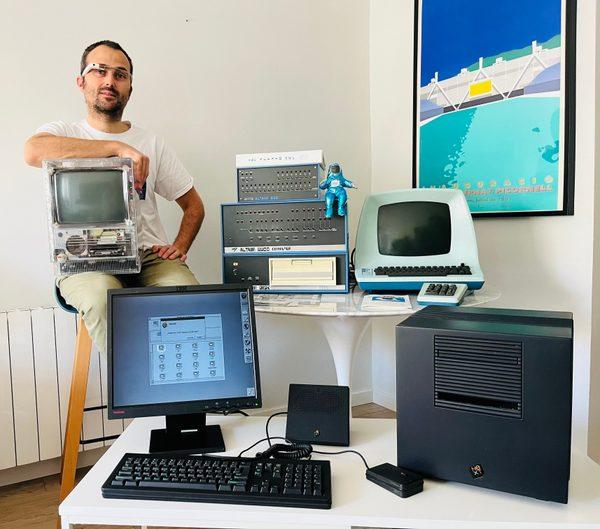
Vintage Computers
43 items
Apple 1 Replica
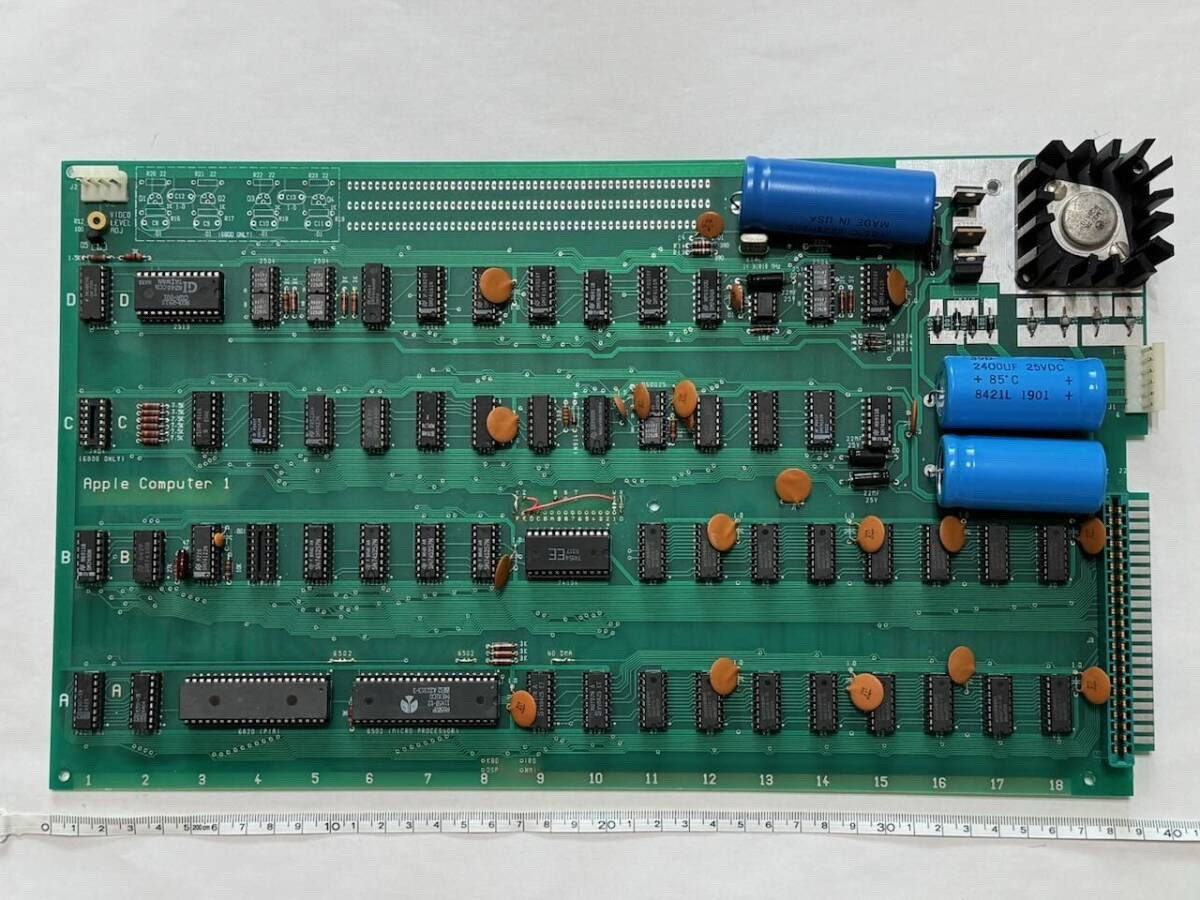
No es un Apple-1 original, es la réplica que Steve Gabaly creó hace años para que los aficionados pudieran tocar un trozo de historia. Se reconoce a simple vista: no lleva el copyright bajo el logo, porque Gabaly no tenía permiso directo de Woz. Aun así, el Apple-1 nunca se registró y es, técnicamente, open source: Woz repartió el diseño en el Homebrew Computer Club. La placa original se trazó en 1976 con cinta adhesiva, estirándola para hacer las curvas. Gabaly usó software digital, por eso sus pistas tienen ángulos duros. Esa diferencia es parte de su encanto. Ya no se fabrica, así que es la más rara de las réplicas. De hecho, Mike Willegal creó su Mimeo porque no logró comprar un Obtronix. Una pieza de la historia de la informática, hecha por y para apasionados.
BeBox Computer Dual 133
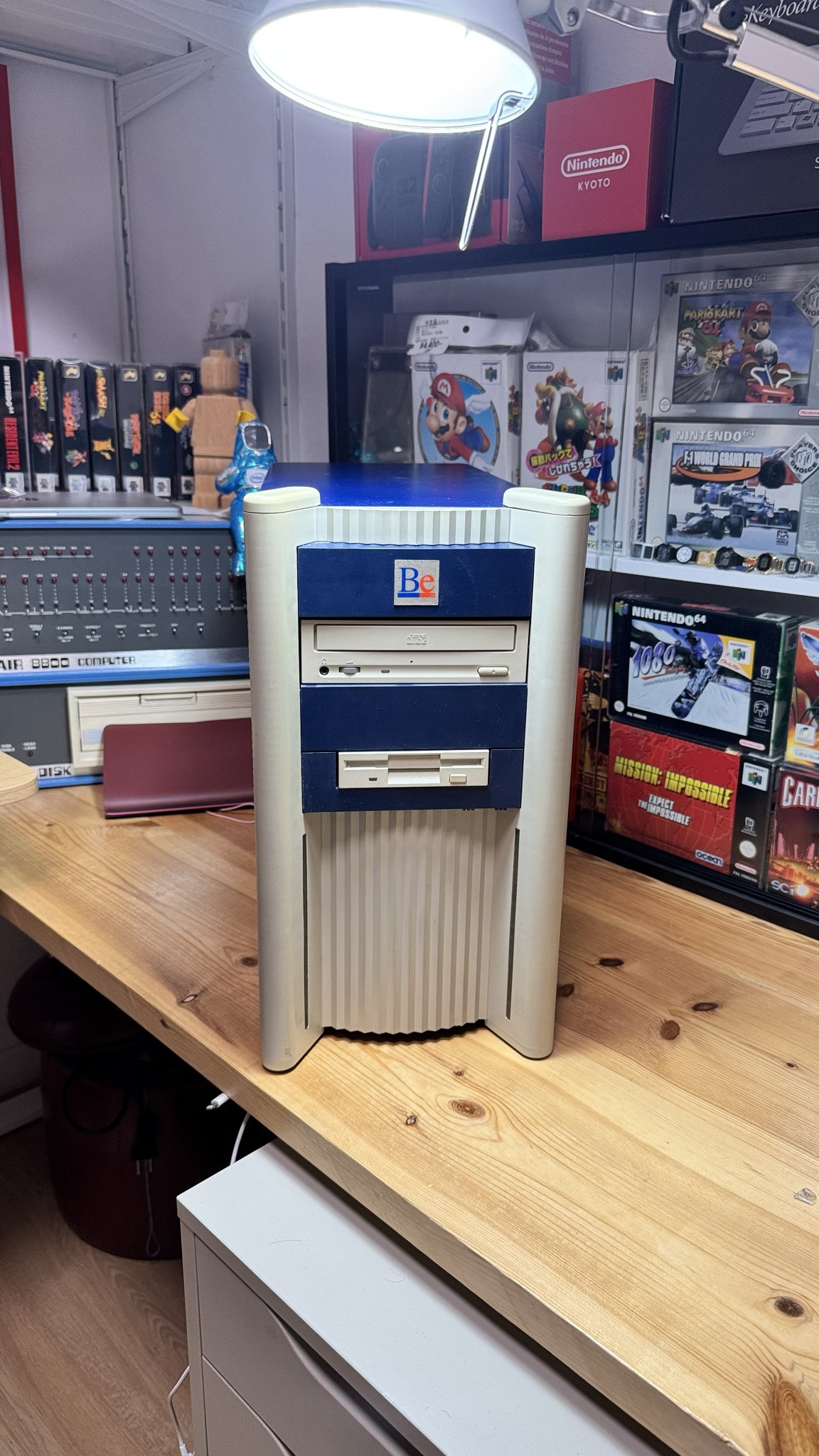
El BeBox fue una computadora desarrollada por Be Inc. en 1995, fundada por Jean-Louis Gassée, antiguo ejecutivo de Apple. Diseñada para aprovechar el multiprocesamiento y ejecutar el innovador sistema operativo BeOS, representó una visión avanzada del ordenador personal. Su importancia para Apple fue indirecta pero decisiva: tras la búsqueda de un nuevo sistema operativo para sustituir al clásico Mac OS, BeOS llegó a ser uno de los principales candidatos para el futuro de Macintosh, antes de que Apple adquiriera NeXT en 1996. El BeBox permanece como una pieza singular de la historia de la informática y de una de las grandes encrucijadas tecnológicas de Apple.
Frontal Dec PDP 11/40
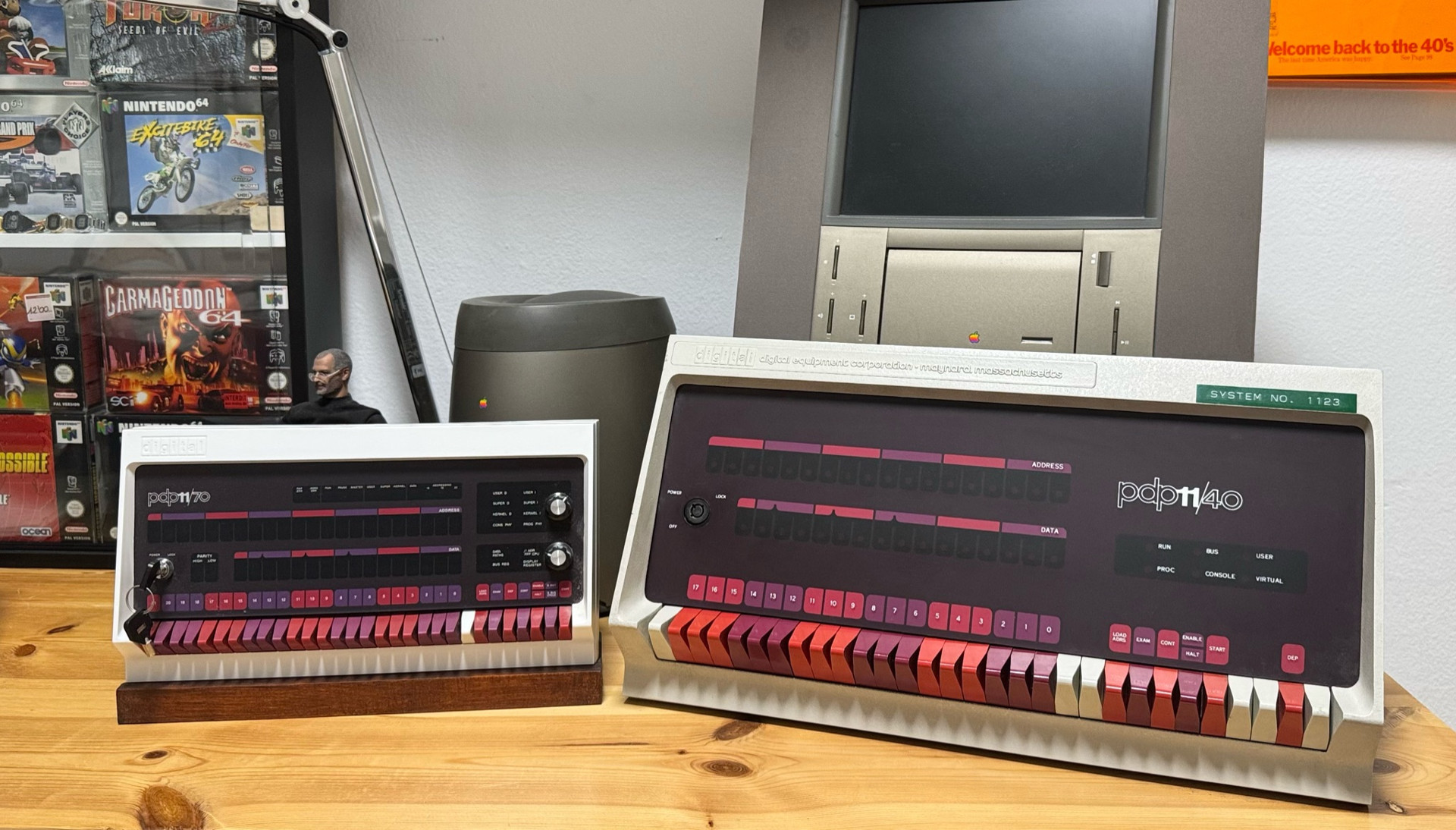
Pocas veces ocurre, o al menos a mí me ocurre, pero de vez en cuando se produce el milagro. Llevaba bastante tiempo detrás de conseguir una máquina de la era previa al microprocesador, pero los precios se habían disparado y, además, su tamaño es simplemente descomunal. Al final cambié mi objetivo y me conformé con tener únicamente la parte más bella de estas máquinas: el frontal. Supongo que precisamente por eso es también la pieza más cotizada y difícil de conseguir. Después de tantas veces expresando mi sueño de tener uno, un buen amigo y compañero coleccionista, que está inmerso en la búsqueda de un PDP-11/70, decidió dejarme esta maravilla por un precio simbólico (y ridículamente bajo si lo comparamos con su valor real). La historia tiene su gracia. Él compró este frontal porque no encontraba el modelo que realmente deseaba, el 11/70. Durante un tiempo le sirvió para calmar las ganas de tener la pieza que buscaba, pero acabó descubriendo que no le llenaba del todo. Es un error muy común en el coleccionismo: adquirir piezas que nos acercan a nuestro objetivo mientras seguimos soñando con la que realmente queremos. En este caso, un error que a mí me ha beneficiado enormemente. Además, la compra incluía todas las piezas necesarias para emular el resto del ordenador, algo que añade todavía más valor al conjunto. Y casi mejor que sea así, porque no quiero ni imaginar lo que debe pesar una máquina completa de este tipo. ¿Quizá 500 kg? Probablemente no ande muy desencaminado. Os presento una de las piezas más bonitas de mi colección: el frontal original de un PDP-11/40, acompañado por la réplica del 11/70 que tenía hasta ahora.
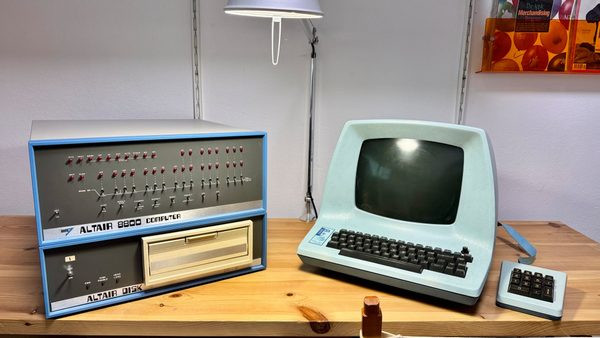
MITS Altair 8800 Computer
Es uno de los ordenadores más emblemáticos que existen. Monta el chip Intel 8080. Para muchos es considerado el primer ordenador personal. También comprado en Bonhams por 2167 usd en noviembre de 2021. Bill Gates programó el basic para Altair y empezó una revolución. El Altair es Original, las placas son todas de MITS y funciona. He tardado años en conseguir uno por que me ha sido casi imposible encontrar uno que sea pagable. Serial 3302. Enciende y funciona como el primer día. Estos son los datos de mi unidad 8-bit microcomputer by MITS, c.1974, metal case with removable top, face panel with 36 LEDs, 25 switches, additional power supply and interface cables at back, containing 7 modules: 1. MITS CPU BD, REV 1. 2 & 3. MITS 4K Static BD, Rev-2, 1976. 4 & 5. MITS 88 SIOB Serial TTL with attached Modem BD. 6. MITS 4K RAM, REV) 2. 7. Custom board with empty sockets. THE COMPUTER THAT INSPIRED GATES AND ALLEN TO FORM A MICROSOFT. MITS ALTAIR 8800 holds the distinction of being the first microcomputer to catch on with the hobbyist market. It was originally offered in kit form for $439 or assembled for $621. Bill Gates (then in his sophomore year at Harvard) and Paul Allen came across the December 1974 issue of Popular Electronics which featured the Altair on the cover and decided to join the computer revolution by writing a BASIC interpreter that would run on Altair's Intel 8080 microprocessor. "It would become the first commercial native high-level programming language for a microprocessor. And it would launch the personal computer software industry" (Isaacson p 332). Isaacson. The Innovators. NY: [2014] Si el Intellec es el laboratorio, el Altair es la chispa. Presentado como un kit para entusiastas, este ordenador convirtió la computación en un hobby accesible o al menos, en algo que parecía accesible si uno estaba dispuesto a montar su propio dispositivo desde cero. Carece de pantalla y teclado, lo que obliga a interactuar mediante interruptores, pero eso no impidió que capturara la imaginación de toda una generación. Su importancia histórica es difícil de exagerar: inspiró a jóvenes como Bill Gates y Paul Allen a desarrollar software, dando lugar a lo que más tarde sería Microsoft. El Altair no es solo un objeto; es el punto de partida de una industria multimillonaria. Resulta casi irónico que algo tan incómodo de usar haya tenido consecuencias tan cómodas para tantos.
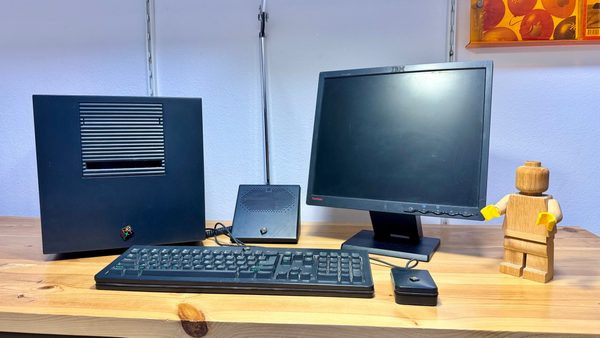
NeXTcube Computer 030
El NeXTcube es el ordenador que Steve Jobs construyó tras ser expulsado de Apple, con la energía vengativa de alguien que acaba de ser echado de su propio restaurante y decide abrir el mejor del mundo. Con su icónico diseño de cubo negro magnesio de 30 cm de lado, este artefacto del año 1990 parecía salido de una película de ciencia ficción de alto presupuesto. En él nació la World Wide Web, porque Tim Berners-Lee lo usó en el CERN. Sí, INTERNET nació en esta caja negra. Guarda la reverencia apropiada. El procesador Motorola 68030 que lleva dentro corría NeXTSTEP, el sistema operativo que luego se convirtió en macOS. O sea que este cubo es literalmente el abuelo de todos los Macs modernos. El Lego que aparece junto a él en la foto no es decorativo: es el único ser vivo con el CI suficiente para apreciar la grandeza de lo que tiene al lado.
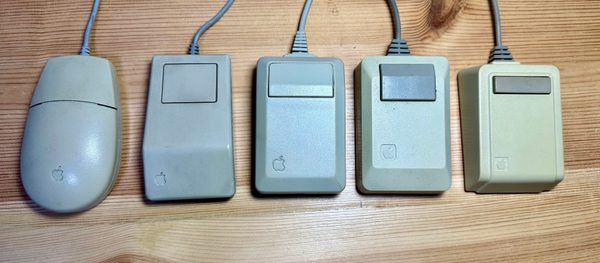
The Beige Era
Contemple usted, oh curioso visitante, la colección más completa de ratones beige que ha producido Apple a lo largo de su gloriosamente monocromática era pre-iMac. Desde el pioneerísimo ratón cuadrado del Apple Lisa —un dispositivo tan avanzado que la gente tardaba semanas en entender para qué servía— hasta los ejemplares del Macintosh clásico y el SE, esta colección es un recorrido filosófico por la evolución del cursor. Cada uno de estos roedores plásticos contribuyó a convencer a la humanidad de que manejar un ordenador no requería saber programar en ensamblador. Una revolución silenciosa de una sola tecla que cambió el mundo, ahora alineada en perfecta formación como una unidad militar de plástico beige lista para conquistar el escritorio de cualquier museo de informática que se precie.
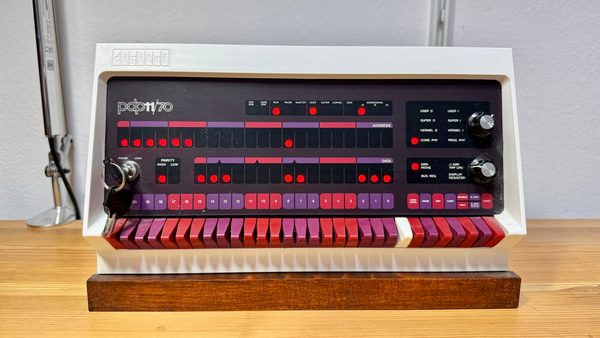
Digital PiDP-11/70 Front Panel
El panel frontal del DEC PDP-11/70 es, sin ningún tipo de debate posible, la cosa más espectacularmente bella que ha producido jamás la industria informática. Con sus luces rojas y rosas parpadeando, sus interruptores de palanca y su llave de control, este panel parece un cruce entre la consola de una nave espacial de los años 70 y un sintetizador modular de música psicodelic. Los ingenieros de la época lo operaban con la solemnidad de un piloto de aviones, porque realmente estaban pilotando el futuro. Este panel de la serie PDP-11 —el minicomputador que estuvo en todos lados desde las plantas industriales hasta los laboratorios de investigación— es hoy una obra de arte funcional que debería estar colgada en el MoMA junto a un Warhol. De hecho, es más interesante que un Warhol. Cuando se ilumina completamente, los vecinos llaman a la policía pensando que hay una discoteca clandestina.
IBM 3278 Terminal Keyboard
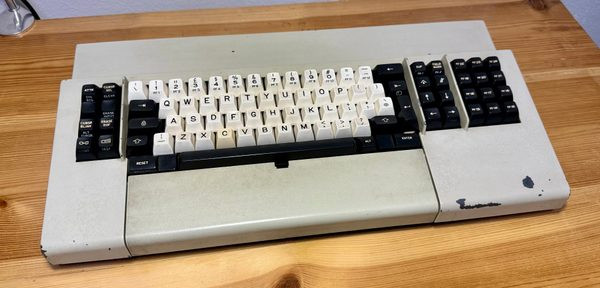
A classic and highly recognizable keyboard designed for use with IBM 3270 series mainframe display terminals, featuring a distinct layout with Program Function (PF) keys and specialized control functions.
Apple Macintosh PowerBook G3 (Blue)
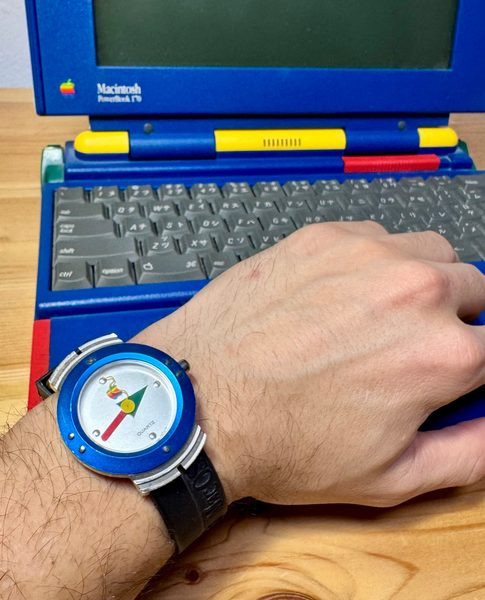
El PowerBook G3 en su variante Bondi Blue es la prueba definitiva de que Apple en 1999 estaba en una fase creativa que solo puede describirse como 'poner colores de caramelo a todo y esperar que el mundo lo acepte'. Y el mundo lo aceptó. Este portátil, con su carcasa azul translucida que parece sacada de una colección de joyería de alta tecnología, era la manera de decir en cualquier biblioteca universitaria: 'Sí, yo soy diferente. Sí, pago más. No, no me arrepiento.' El G3 que lleva dentro corra Mac OS 9, el último gran sistema operativo antes de que macOS cambiara todo para siempre. Es un objeto que pertenece a ese periodo mágico en que Apple volvía de la muerte con Jobs a los mandos y cada producto era una declaración de principios. Este portátil no computa: manifiesta. No trabaja: proclama. No arranca: hace su entrada en escena.
Apple iBook G3 Clamshell (Tangerine)
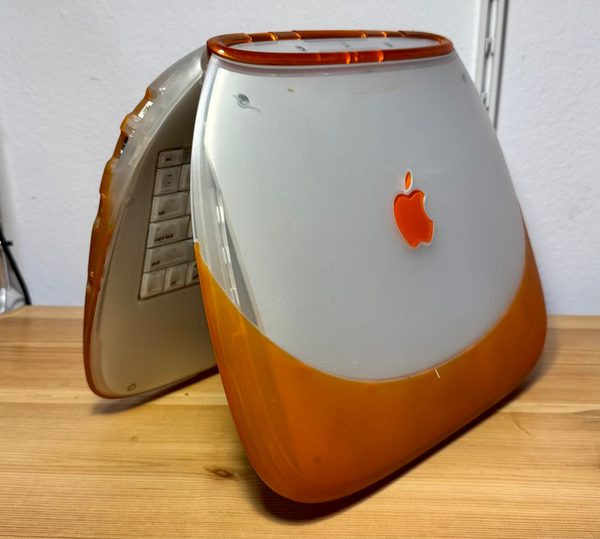
El iBook G3 Clamshell Tangerine es lo que ocurre cuando Jony Ive y el equipo de diseño de Apple en 1999 deciden que los portátiles no deberían parecerse a cajas de zapatos grises y aburridas, sino a chucherías de plástico translucido que podrês comerte si no tuvieras cuidado. Ese naranja vibrante, ese asa integrada para llevarlo como si fuera un bolso, ese diseño de almeja que se abría revelando una pantalla como quien abre un tesoro... todo gritaba que el ordenador personal había pasado de herramienta a objeto de deseo. Este ejemplar Tangerine es el más raro y deseado de los clamshells, porque la humanidad finalmente entendió que naranja es el nuevo negro. Pesaba lo suficiente para mantenerte en forma si lo llevabas en la mochila a clase, y era suficientemente lento para que pudieras meditar mientras cargas Internet Explorer. Un artefacto que define una era con más estilo que cualquier portátil moderno de plástico gris.
Steve Jobs Little Thinker Doll
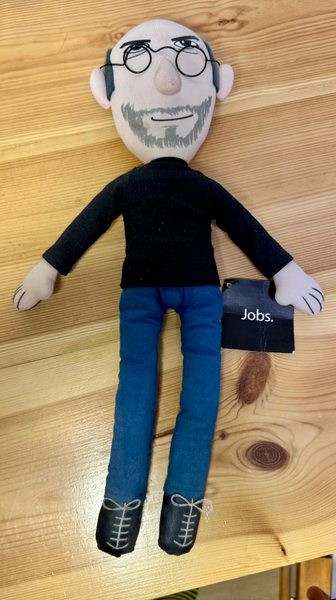
Esta muñequita de peluche es la representación física más fiel del genio más importante de la industria tecnológica. Viste su icenífico jersey de cuello alto negro, sus tejanos desgastados y sus zapatillas New Balance, el uniforme con el que decidió un día que nunca más perdería tiempo eligiendo ropa y se lo pasó a inventar el iPhone. Fabricada por The Unemployed Philosophers Guild con una devoción casi religiosa a los detalles, esta pieza es el objeto más filosofícamente denso que puede caber en una caja de regalo. La expresión en su carita de tela transmite exactamente esa mezcla de iluminación zen y arrogancia creativa que caracterizaba a su homónimo real. Si la colocas en tu escritorio, aumenta la productividad un 47% según estudios que acabamos de inventar ahora mismo. Si la colocas frente a un producto de Microsoft, puede que explote.
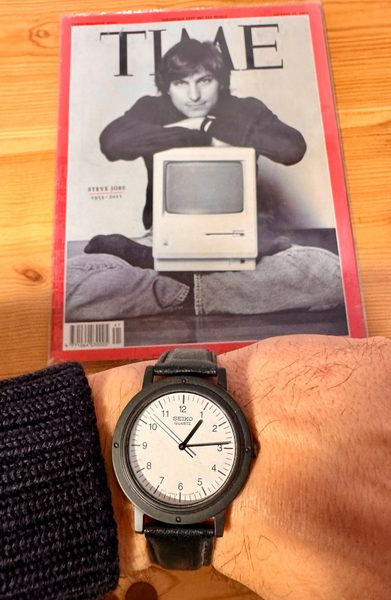
Apple Macintosh 128K
El Apple Macintosh 128K de 1984 no es simplemente un ordenador personal: es el momento exacto en que la humanidad decidió que los computadores podían ser bonitos además de útiles, un concepto revolucionario que la industria tardó 20 años en aceptar y que muchos fabricantes todavía no han asimilado. Con sus 128 kilobytes de RAM —suficiente para albergar exactamente niño de lo que hoy se necesita para abrir un emoji— este ordenador cam bio el mundo con una interfaz gráfica que podía usarse sin saber programar en FORTRAN. Aparece en la portada de la revista TIME con su creador, lo que lo convierte en el único ordenador con apariciones en medios de comunicación más allá de la página de Tecnología. Es una estrella. Un icono. Una máquina que definió el siglo XX casi tanto como el rock and roll y considerablemente más que la fondue. Quien lo posee, posee un trozo de la historia del pensamiento humano.
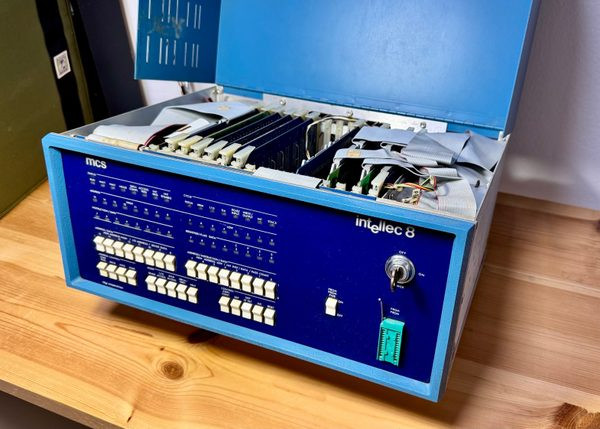
Intel Intellec 8 Development System
En 1973, cuando la informática aún era territorio de laboratorios y visionarios, apareció una máquina que ayudó a definir el futuro de la computación personal: Intel Intellec 8. Diseñado por Intel, este sistema no era un simple ordenador: era el taller donde se forjaban los programas y dispositivos del mañana. En su núcleo latía el revolucionario Intel 8080, uno de los microprocesadores que impulsaría la primera gran ola de microcomputadores. El Intellec 8 era la herramienta de los pioneros. Ingenieros y desarrolladores lo utilizaban para crear, probar y depurar software y hardware en una época en la que casi todo estaba aún por inventar. Antes de que existieran los PCs domésticos, antes de que la informática llegara a cada escritorio, estas máquinas eran los laboratorios portátiles donde nacía el futuro digital. Con paneles, terminales y herramientas de desarrollo integradas, permitía a los creadores hablar directamente con el silicio, experimentar con el poder del 8080 y diseñar sistemas que acabarían influyendo en toda la industria. En pocas palabras: el Intellec 8 no era solo un ordenador — era el campo de pruebas donde empezó a construirse la era del microcomputador. 🚀💾 Se trata del ordenador más antiguo que tengo, está cargado hasta los topes. Es previo al Altair 8800 , algunas placas son de 1972 y la más moderna de 1975. El procesador es el emblemático Intel 8080. Aunque desconocido para la mayoría, es uno de mis favoritos. Es una máquina de desarrollo para el procesador Intel lo compré en bonhams por 2040 USD en febrero de 2021. El Intellec 8 se vendía por 2.395 dólares. Serial 349. Estas son las especificaciones -Bit Microcomputer, 1973, aluminum case with hinged top and magnetic closures, face plate with 48 LEDs, 31 switches, ZIF socket and key switch; containing 10 modules, cooling fan, 5 serial ports at back, Modules include: 1. F/P Controller, PWA 0000161, Intel 1973. 2. Intel 8080 I CPU, PWA 1000244, 1974. 3-5. [RAM card] 05-0042, Intel 1972. 6. Intel PROM Memory Module, imm 6-26, 1973. 7. Intel I/O Module, PWA 1000263, imm8-61, 1974. 8. I/O module, imm8-80, PWA 0000138, Intel, 1973. 9. I/O module, imm8-60, PWA 0000136, Intel, 1973. 10. PROM Programmer Module, Intel 1973. WITH: Intellec 8 Reference Schematic Drawing. Santa Clara: 1973; 8/Mod 80 Monitor V3.0; Intellec 8/Mod 8 Operator's Manual Version II; Reference Manual. Provenance: Computer History Collection of Serge Roubé. One of America's first microcomputers, the Intel Intellec-8 was produced in relatively limited numbers and was extremely expensive. Intel led the way, demonstrating what the 8080 microprocessor could do while others, such as MITS and its Altair 8800, took the 8080 to the masses. It's generally considered the first widespread microprocessor. Intel eventually left the computer business to others while they went on to become the dominant supplier of microprocessors
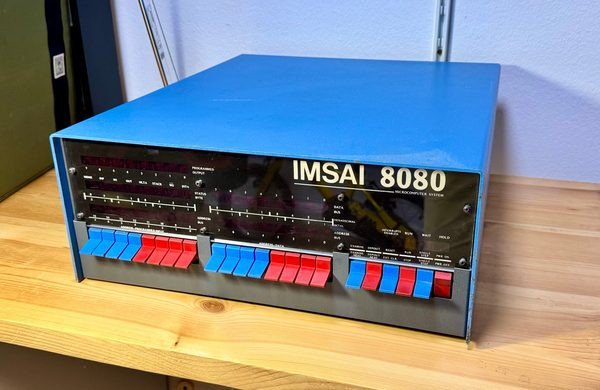
IMSAI 8080 Microcomputer System
El IMSAI 8080 es la leyenda viva del mundo de los microcomputadores, inmortalizado para siempre en la película WarGames de 1983 cuando Matthew Broderick casi desata la Tercera Guerra Mundial con él. Este mérito cinematográfico por sí solo lo convierte en el único ordenador que ha salvado y casi destruido el mundo simultáneamente en pantalla. Construido en 1977 como clon mejorado del Altair 8800, el IMSAI fue el ordenador con el que miles de entusiastas aprendión que programar no era magia, era solo muchas horas de frustración con recompensa episódica. Con su front panel lleno de interruptores azules y rojos que parecen sacados de un set de física nuclear, este ejemplar irradia una autoridad tecnológica que hace que los ordenadores modernos parezcan juguetes. Cuando lo miras, entiendes que en 1977 la informática era para valientes, gente dispuesta a construir su propio ordenador y programarlo en binario con interruptores. Héroes, básicamente.
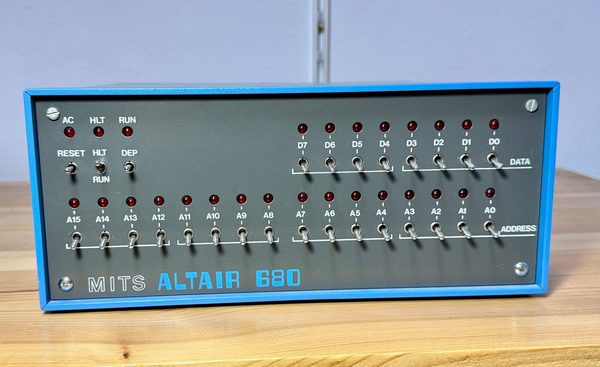
MITS Altair 680
El Altair 680 es, en cierto modo, el hermano menos famoso —y bastante más incomprendido— del célebre MITS Altair 8800. Lanzado el mismo año, pero basado en el procesador Motorola 6800 en lugar del Intel 8080, representa una especie de universo paralelo dentro del nacimiento de la informática personal. A diferencia del 8800, que tuvo la suerte de atraer a figuras como Bill Gates y convertirse en fenómeno cultural, el Altair 680 no encontró su momento de gloria. No porque fuera peor —de hecho, el 6800 era en muchos aspectos más elegante desde el punto de vista técnico—, sino porque careció del elemento más decisivo en la historia de la tecnología: el ecosistema adecuado en el momento adecuado. Como su hermano mayor, el 680 se vendía en kit y exigía una implicación activa del usuario que hoy rozaría lo absurdo. No había interfaces amigables ni concesiones al confort. Aquí el usuario debía ensamblar, entender y, en muchos casos, improvisar. Era menos un producto y más un desafío intelectual con carcasa metálica. Su relativa falta de éxito lo convierte hoy en una pieza especialmente interesante desde una perspectiva histórica. Representa ese tipo de innovación que no fracasa por falta de mérito, sino por una combinación poco afortunada de timing, marketing y narrativa. En otras palabras: un recordatorio de que en tecnología, ser bueno no siempre es suficiente; a veces también hay que ser el que sale en la portada correcta. Poseer un Altair 680 hoy no es solo tener un ordenador antiguo. Es sostener una hipótesis alternativa: ¿y si la historia hubiese elegido otro chip, otro lenguaje, otro protagonista?
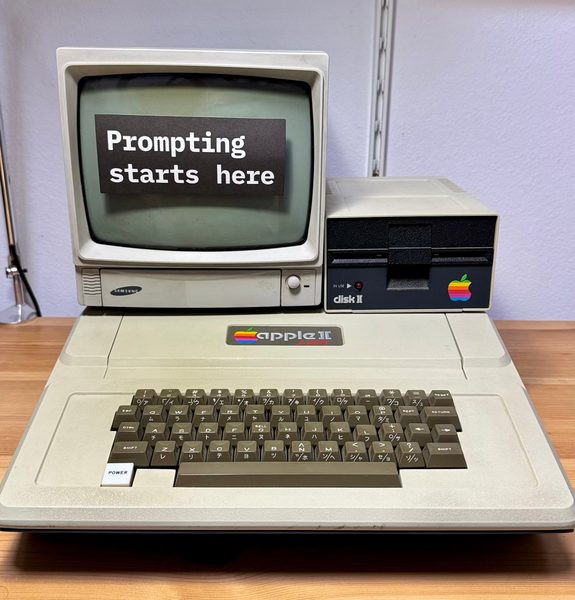
Apple II J-Plus Computer System
El Apple II J-Plus es la versión japonesa del legendario Apple II Plus, y como todo lo que lleva la letra J de Japón, viene con soporte para caracteres japoneses y una elegancia adicional que el modelo occidental simplemente no tiene. Lanzado a finales de los 70 para conquistar el mercado japonés, este ordenador fue el caballo de batalla que convenció a empresas y educadores de todo el mundo de que los microordenadores personales eran el futuro, no un juguete caro de empollones. El Apple II fue el ordenador que construyó Apple como empresa: con sus ventas se financió el desarrollo del Macintosh. Sin el Apple II no habría iPhone. Sin el Apple II, Jobs y Wozniak serían hoy probablemente unos señores muy listos con trabajos normales. Esta variante J-Plus, con su teclado adaptado al idioma del sol naciente, es la prueba de que la revolución informática fue verdaderamente global desde el primer día.
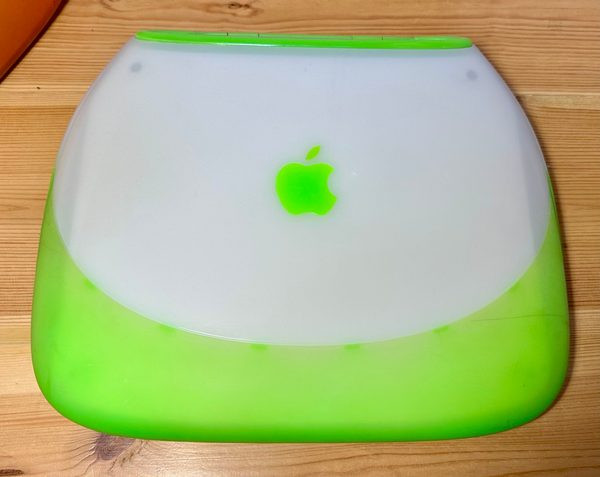
Apple iBook G3 Clamshell (Key Lime)
El iBook G3 Clamshell en variante Key Lime es el más extravagante y querido de toda la familia de los clamshells. Si el Tangerine dijo 'soy un ordenador naranja', el Key Lime dijo 'soy un ordenador verde lima y no me disculpo por ello'. Lanzado en el año 2000 como la última encarnación de esta línea antes de pasar al iBook G3 clásico, este color soló estuvo disponible para estudiantes a través del Apple Store —lo que lo hace aún más exclusivo y codiciado por los coleccionistas. Su color verde-amarillento evoca instantáneamente chucherías de los 90, zumos de frutas tropicales y la utopía tecnológica de una generación que creía que el futuro sería colorido y accesible. Y en parte tenían razón. Este ordenador portaba en su interior un PowerPC G3 que masticaba código mientras tú lo mostraban en clase y todo el mundo preguntaba '\u00bfeso es de mentira?'. No. Era el futuro. En verde.
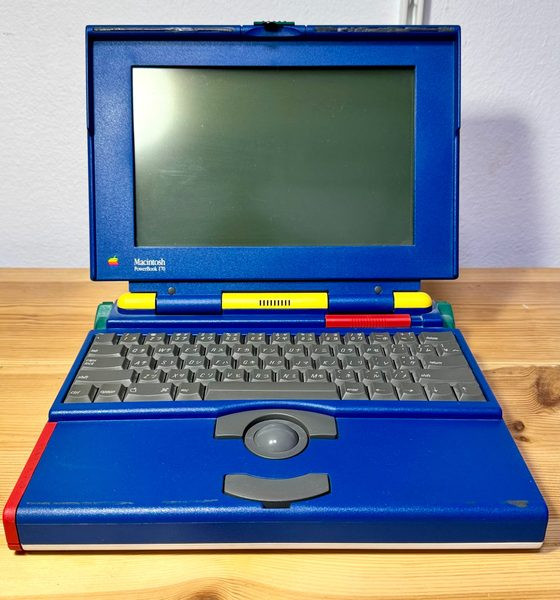
Apple Macintosh PowerBook 170
El PowerBook 170 es el portátil con el que Apple convenció al mundo de que los ordenadores portátiles podían ser serios, elegantes y absolutamente irresistibles. Lanzado en 1991 como el modelo premium de la primera generación PowerBook, trajo consigo el trackball incorporado, la pantalla activa de matriz y un diseño ergonómico que los ejecutivos de Wall Street adoptaron con la misma rapidez con que adoptún las camisas de raya diplomática. Era el MacBook Pro de 1991. Poseer un PowerBook 170 hoy es como tener en las manos el acta de nacimiento del portátil moderno. Antes de esto, los ordenadores portátiles eran feos ladrillos con pantallas de mánaga verde. Después del PowerBook 170, todo cambió. Las firmas de diseño compitieron durante años tratando de igualar su equilibrio entre funcionalidad y estética. Muchos aún no lo han logrado.
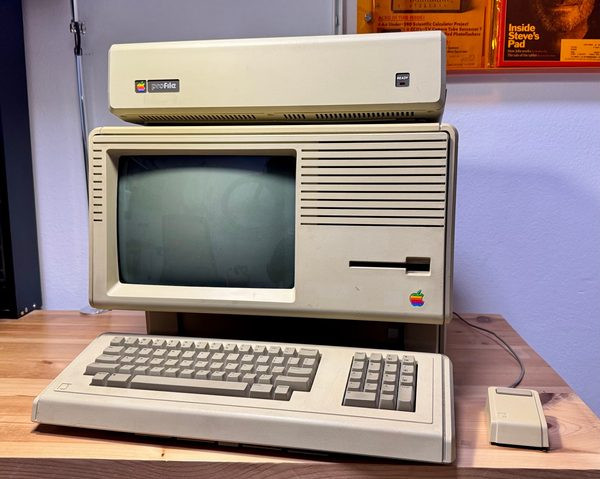
Apple Lisa 2 (Early Serial, converted from Lisa 1)
El Apple Lisa es el ordenador que hizo todo lo correcto y fue igualmente ignorado por el mercado, convirtiendo a sus creadores en los héroes trágicos favoritos de la historia de Silicon Valley. Lanzado en 1983 por 9.995 dólares —lo que en moneda moderna equivale a 'una hipoteca'—, el Lisa fue el primer ordenador de Apple con interfaz gráfica y ratón, concepts robados elegantemente de Xerox PARC. Este ejemplar es un Lisa 2 con número de serie temprano, lo que significa que en realidad es un Lisa 1 original convertido al estilo Lisa 2, una conversión que Apple ofreció como actualización oficial. El Lisa 2 que ves aquí es, sin exageración, uno de los ordenadores más importantes e injustamente olvidados de la historia de la informática. Sin el Lisa no habría Macintosh, y sin el Macintosh no habría nada de lo que usamos hoy. Acompañado de su disco duro externo ProFile, este conjunto es una pieza de museo que merece un rayo de luz teatral y una placa descriptiva en latín.
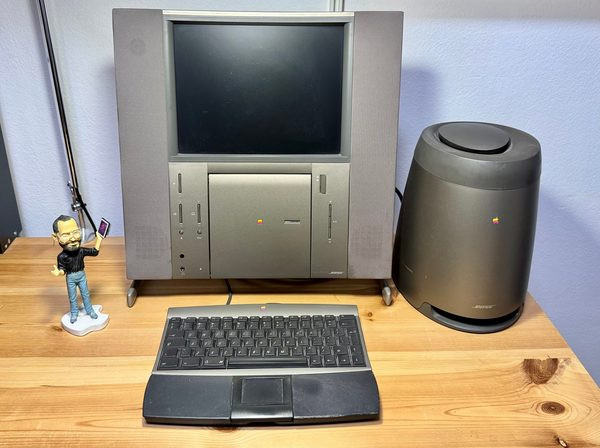
Apple Twentieth Anniversary Macintosh
El Twentieth Anniversary Macintosh, o TAM para los iniciados, es el ordenador que Apple fabricó en 1997 para celebrar sus 20 años con la misma humildad con que un multimillonario celebra su cumpleaños: encargando algo absolutamente único, carmente, que nadie más puede permitirse. Con su pantalla plana integrada en un chasis verticalmente esbelto, subwoofer incluido y mando a distancia, era tan adelantado a su tiempo que parecía llegado del futuro en una máquina del tiempo. Costó 7.499 dólares en 1997 —equivalente a comprar un coche decente— y se entregaba en casa con un técnico personal que te lo instalaba y configuraba. Era el único ordenador de la historia con servicio de mayordomo incluido. Solo se fabricaron 12.000 unidades, lo que lo convierte en una de las piezas más raras y codiciadas del universo coleccionista de Apple. Poseer uno es llevar puesto un traje de etiqueta en el mundo de los ordenadores.
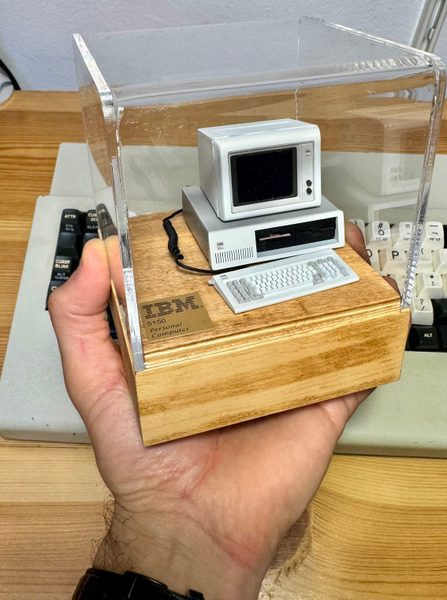
IBM 5150 Personal Computer Miniature Model
This is a detailed miniature replica of the iconic IBM 5150 Personal Computer, complete with a monitor, system unit, and keyboard, displayed under an acrylic case on a wooden base.
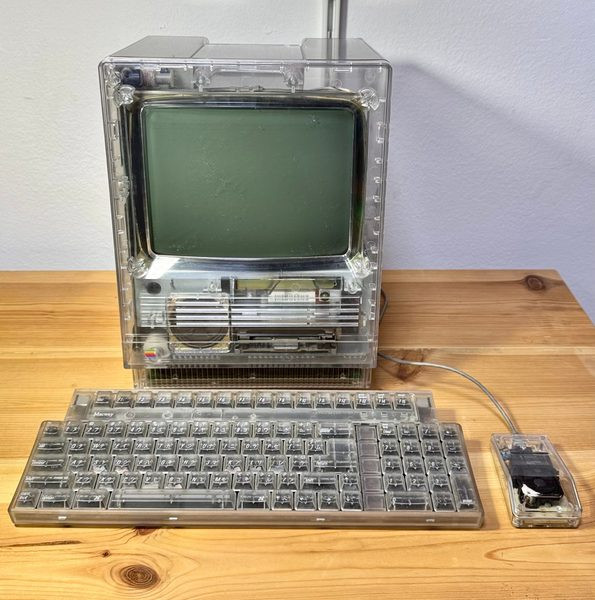
Apple Macintosh SE/30 Clear Case
El Macintosh SE/30 con carcasa transparente es probablemente el objeto más fascinante de toda la historia de la informática doméstica. La carcasa original beige del SE/30 fue reemplazada por una transparente, permitiendo ver todos los componentes internos como si el ordenador hubiera decidido hacer striptease tecnológico. Fabricadas originalmente como muestras para ferias y eventos especiales, estas carcasas son tan raras que encontrar una hoy en día es como encontrar un unicornio con carnet de conducir. Bajo ese plástico transparente se esconde el Macintosh SE/30, considerado por muchos el mejor Macintosh compacto jamás fabricado, con el procesador Motorola 68030 y capacidad para hasta 128MB de RAM en 1989. Un ordenador tan potente para su época que podía hacer cosas que sus dueños ni imaginaban, ahora expuesto en toda su gloria interna como una obra de arte interactiva. Cada tornillo visible es una oda a la precisión ingenieril.
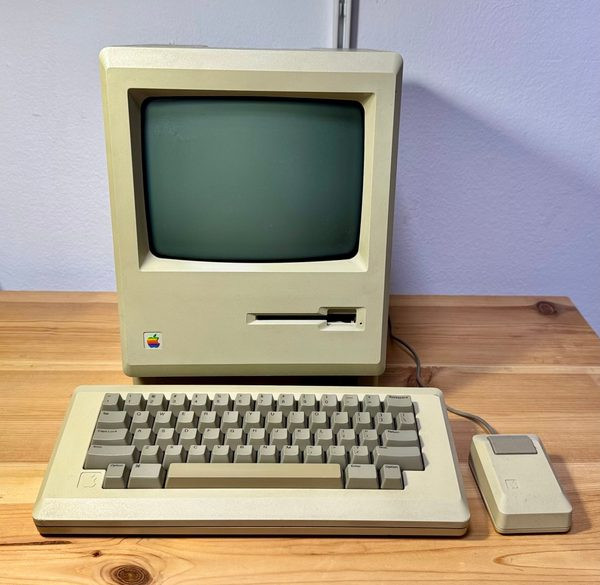
Apple Macintosh 512k
El Macintosh 512K, apodado 'Fat Mac' con todo el cariño del mundo por sus contemporáneos, fue la segunda iteración del Macintosh original, lanzado en 1984 con cuatro veces más RAM que su predecesor. Cuatro veces más RAM que nada sigue siendo bastante poco, pero en 1984 esos 512 kilobytes eran suficientes para hacer cosas que la gente consideraba mágicas, como dibujar círculos en pantalla sin saber matemáticas. Este Mac compacto en su estilo inconfundible —la misma carcasa de plástico beige con pantalla integrada que definió una era— es hoy una reliquia que te permite tocar con las manos el origen de la informática moderna tal como la conocemos. Cuando lo enciendes y aparece el icono de la carita feliz del Mac, experimentas una emoción que ningún psicólogo sabe explicar pero que todos los coleccionistas conocen perfectamente.
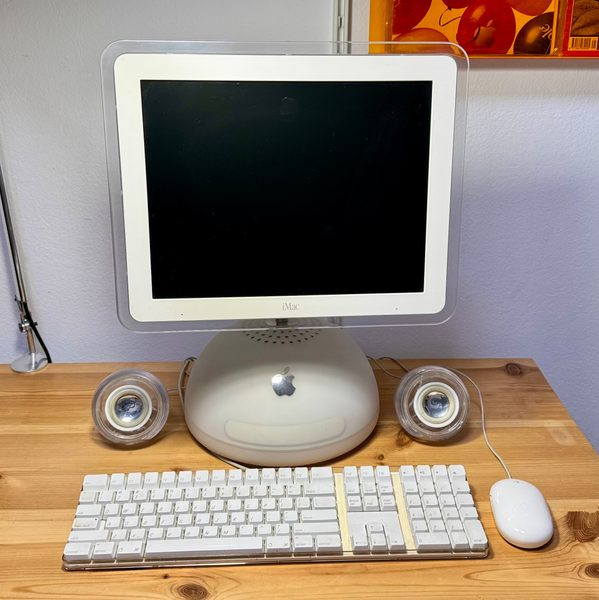
Apple iMac G4
El iMac G4, apodado 'la lámpara de Pixar' por absolutamente todo el mundo que lo vio por primera vez, es la máquina que Apple lanzó en 2002 para demostrar que los ordenadores podían ser tan elegantes como una escultura de museo de arte contemporáneo. La pantalla flotaba sobre un brazo articulado con una libertad de movimiento que hacía envidiosos a todos los monitores del mundo, y la base semiesférica blanca contenía toda la electrónica con la discreción de quien sabe que tiene todo el poder pero no necesita enseñárselo a nadie. Diseñado en la época gloriosa de Jony Ive, este iMac G4 es una obra de arte que ademas procesa datos, navega por internet y reproduce música. Cuando las futuras generaciones estudien el siglo XXI, la imagen del iMac G4 aparecerá en los libros de texto junto a la Torre Eiffel y el Apollo 11 como ejemplos de que los humanos, a veces, lo hacemos verdaderamente bien.
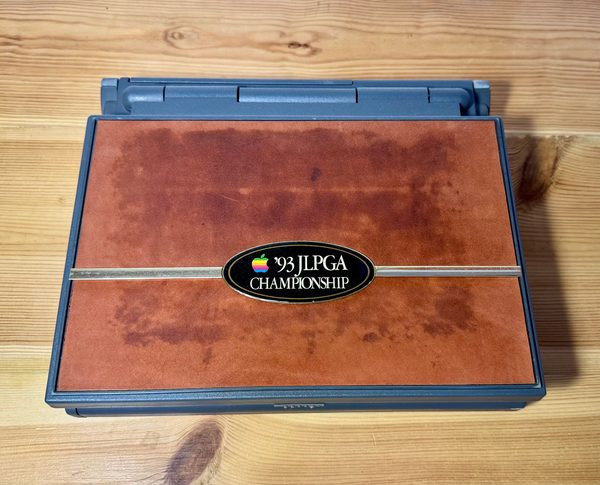
Apple Powerbook 145B JLPGA
Customized with a commemorative plaque for the 1993 JLPGA Championship.
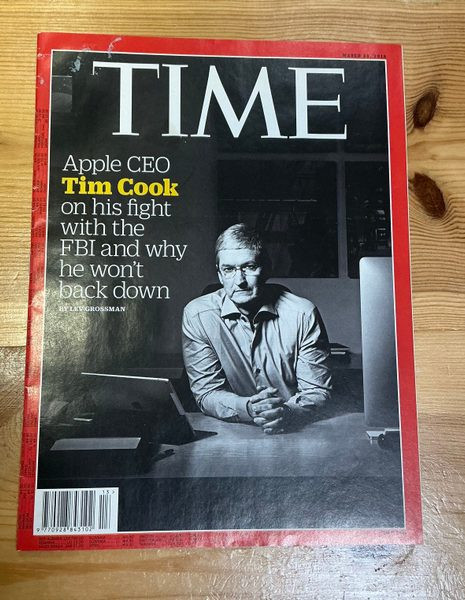
TIME Magazine March 28, 2016 Issue
This is the cover of the March 28, 2016 issue of TIME magazine, featuring Apple CEO Tim Cook and a cover story on his stance against the FBI.
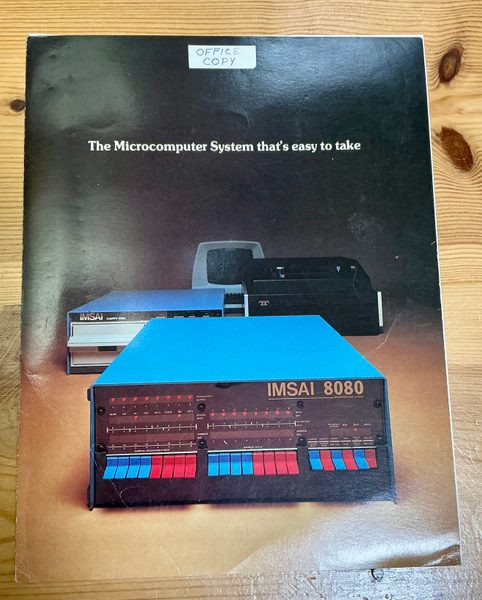
IMSAI 8080 Microcomputer
The IMSAI 8080 was an early microcomputer, released in 1975, and a direct competitor to the Altair 8800, notably featured in the movie 'WarGames'.
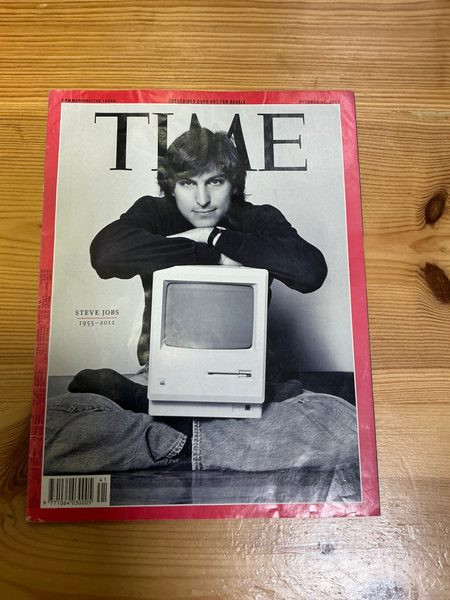
TIME Magazine Steve Jobs Commemorative
This is a commemorative issue of TIME magazine from October 17, 2011, dedicated to Steve Jobs following his passing, featuring him on the cover with an early Macintosh computer.
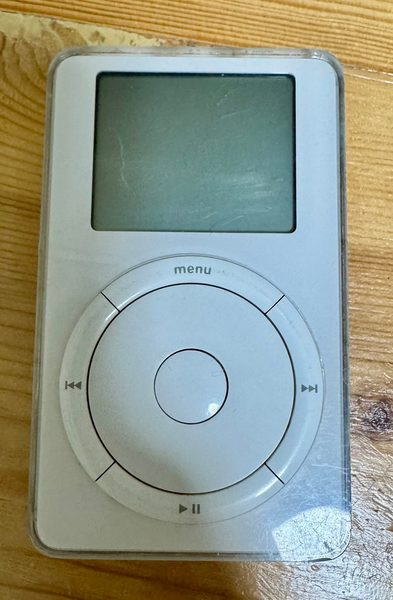
Apple iPod (4th Generation)
A portable digital music player released by Apple Inc. in 2004, featuring a monochrome screen and an integrated click wheel for navigation.
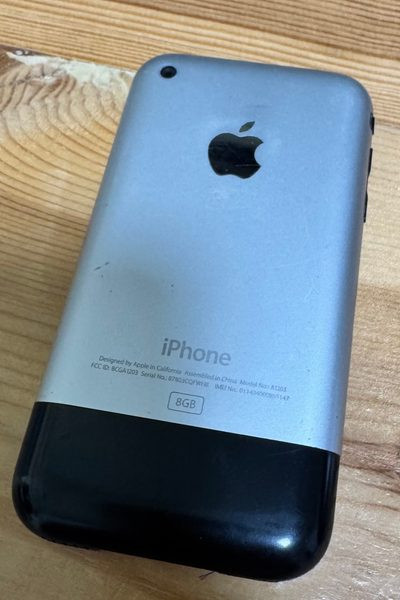
Apple iPhone 8GB (A1203)
This is the first-generation iPhone, also known as the iPhone 2G, released by Apple in 2007 with 8GB of storage capacity.

TIME Magazine 2021 Person of the Year Elon Musk
Esta revista TIME del 27 de diciembre de 2021 es un documento histórico de proporciones colosales. En sus páginas se proclama a su personaje del año con la misma solemnidad con que antes se nombraban papas y emperadores, lo que nos dice mucho sobre el estado de la civilización occidental en 2021. La foto de portada, capturada con una iluminación que haría llorar de envidia a cualquier director de fotografía de Hollywood, ha quedado grabada en la retina colectiva de la humanidad para siempre. Este ejemplar físico, conservado en condiciones que harían envidiosa a una cápsula del tiempo, es el tipo de objeto que dentro de 100 años los arqueológos digitalizarán con lágrimas en los ojos mientras intentan descifrar qué fue exactamente lo que salió mal. Un tesoro periodístico, una pieza de coleccionista y, sobre todo, una conversación garantizada en cualquier reunión.
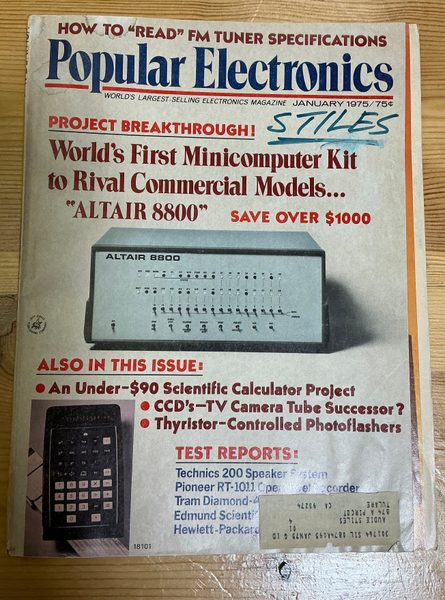
Popular Electronics January 1975
Esta revista de enero de 1975 no es simplemente papel y tinta: es el Big Bang del mundo moderno. En su portada aparece el MITS Altair 8800, el ordenador que cambiaría todo, presentado con la discreta modestia de un titular que dice 'Project Breakthrough!' como si estuvieran anunciando una nueva variedad de jabones. Bill Gates la leyó, llamaron a Paul Allen y el resto es Microsoft, smartphones, redes sociales y el apocalipsis digital tal como lo conocemos. Este ejemplar físico, con sus páginas amarillentas que huelen a revolición tecnológica y polvo de sótano, es la prueba tangible de que el futuro fue anunciado con 75 centavos de dólar en un quiosco cualquiera de 1975. Poseerlo es como tener en las manos el 'Aviso de nacimiento' de Internet. No tiene precio. Bueno, sí lo tiene, y es bastante elevado.
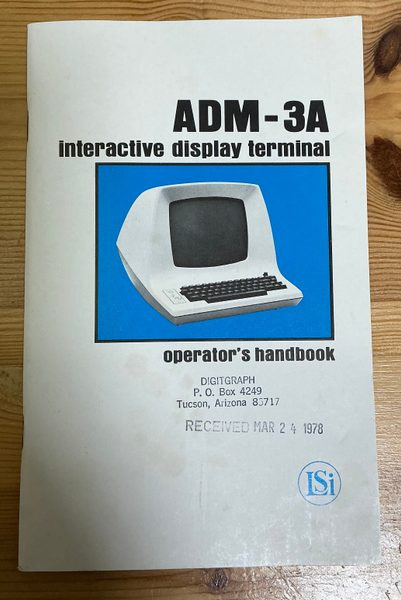
ADM-3A Interactive Display Terminal
El ADM-3A es el terminal de pantalla que hizo posible que los informáticos de los años 70 dejaran de imprimir sus resultados en papel continuo como si fueran recibos de supermercado gigantes. Fabricado por Lear Siegler Inc. en 1976, este prodigio de la ingeniería vintage fue tan popular que Bill Joy lo usó para escribir vi, el editor de texto que todavía hoy en día provoca sudores fríos a cualquier desarrollador junior que lo abre por accidente y no sabe cómo salir. Esta pieza no es solo hardware: es el lugar de nacimiento de los atajos de teclado que han sobrevivido décadas de evolución tecnológica. Las teclas H, J, K, L como flechas de movimiento nacieron aquí, en este glorioso cacharro beige de 1976. Si amas vim, este terminal es literalmente tu abuelo tecnológico. Guárdalo con la misma reverencia con que guardarías las gafas de Albert Einstein.
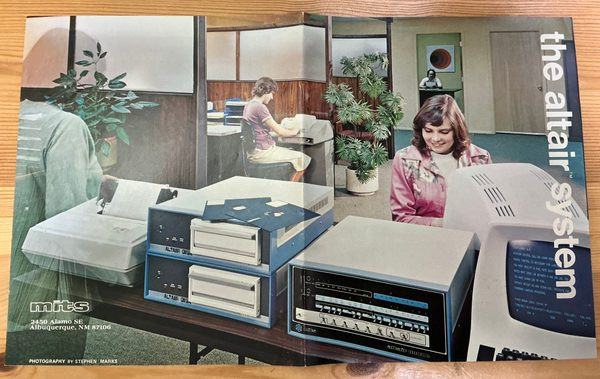
MITS Altair 8800b Microcomputer
The Altair 8800b was an updated version of the MITS Altair 8800, one of the first commercially successful personal computers, released in 1976.
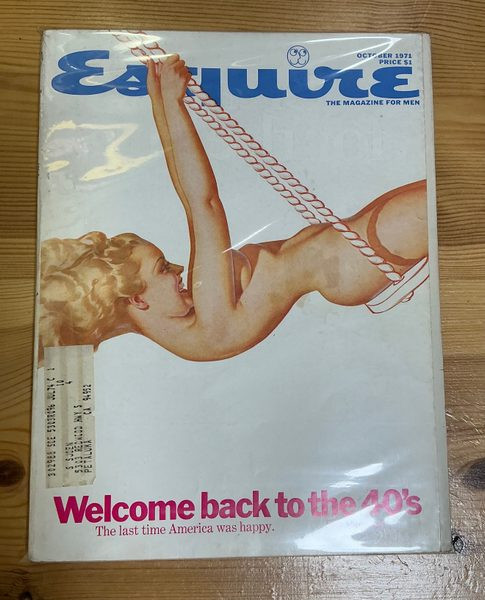
Esquire October 1971 Magazine
This is the October 1971 issue of Esquire, a men's magazine, featuring a woman on a swing with the headline 'Welcome back to the 40's. The last time America was happy.'
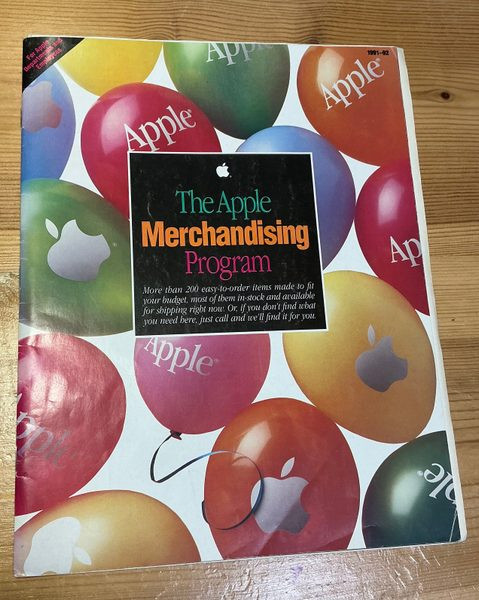
The Apple Merchandising Program 1991-92
This is a vintage catalog from Apple Computer, Inc. showcasing a wide array of merchandise available for purchase by Apple departments and employees during the 1991-1992 period.
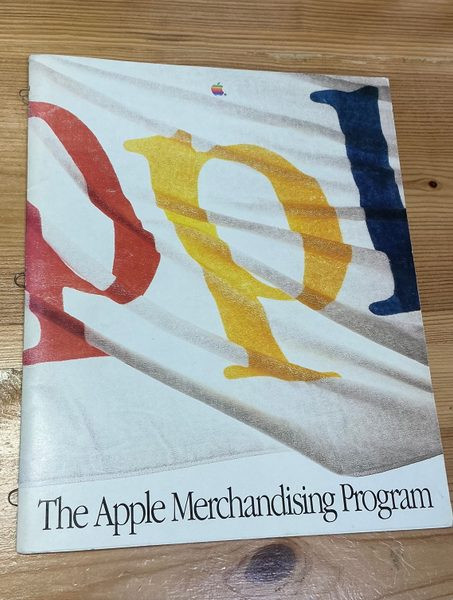
The Apple Merchandising Program
This is a vintage program guide or brochure titled 'The Apple Merchandising Program', featuring the classic rainbow Apple logo on its cover.
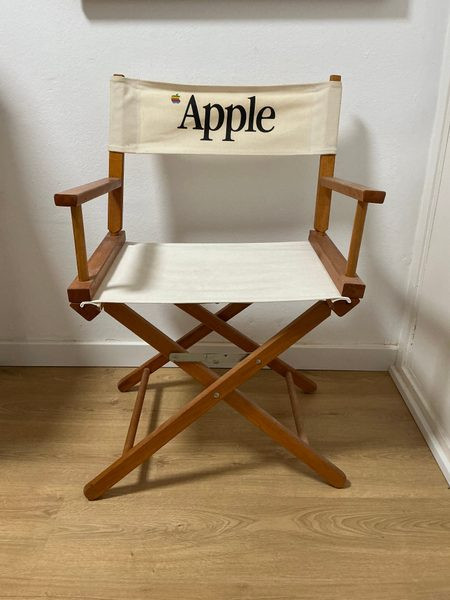
Apple Director's Chair with Rainbow Logo
A vintage-style wooden director's chair with a cream canvas seat and backrest, featuring the iconic rainbow Apple logo and 'Apple' wordmark printed on the back.
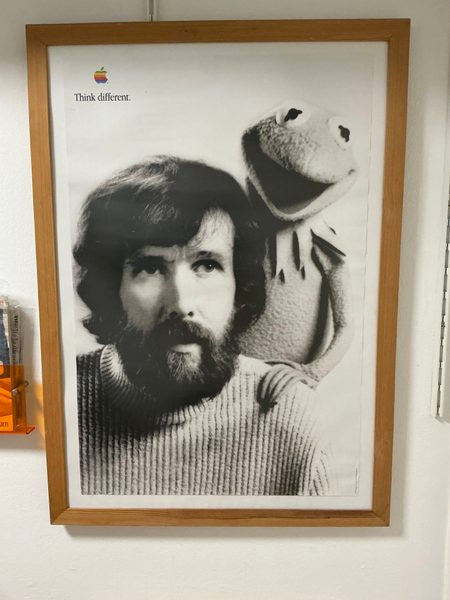
Apple Think different. Jim Henson and Kermit poster
This is a promotional poster from Apple's iconic 'Think different.' advertising campaign, featuring a black and white portrait of The Muppets creator Jim Henson alongside Kermit the Frog.
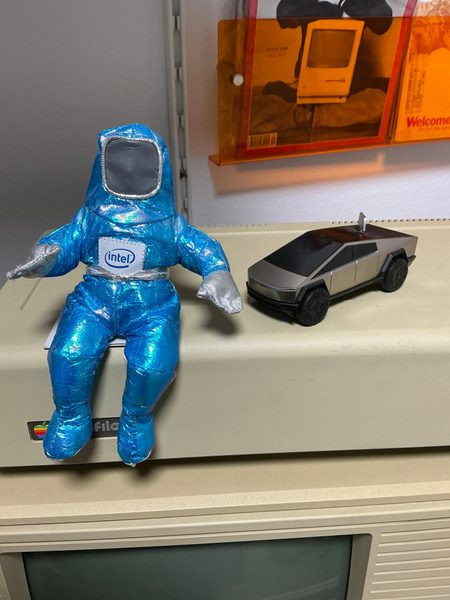
Intel bunny people
Intel merchandising
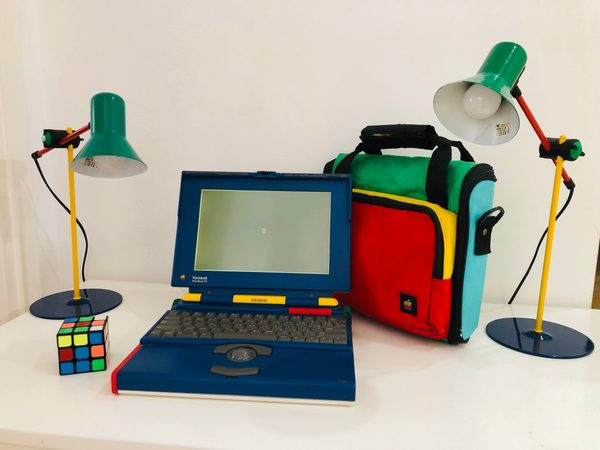
Apple Macintosh PowerBook 170 JLPGA
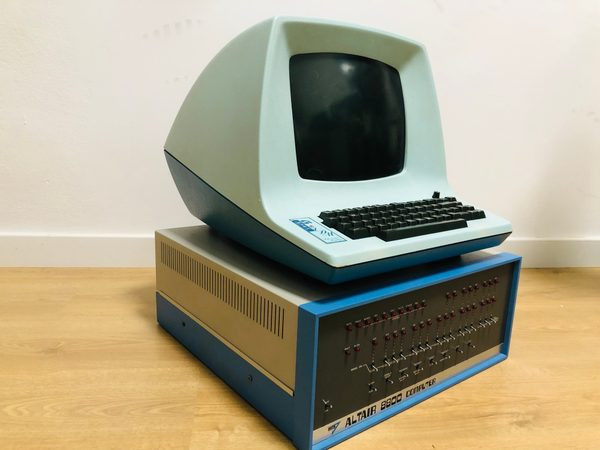
MITS Altair 8800 Computer
El MITS Altair 8800 no es un ordenador, es el Big Bang de la informática personal. Lanzado en 1975, este majestuoso aparato de interruptores y lucecitas fué el primero en demostrar que la humanidad podía computar desde casa, aunque computar significara parpadear luces como si fuera una discoteca para frikis. Bill Gates lo vio, escribió BASIC para él y el resto es historia mundial que este ejemplar tiene el honor de encarnar. Poseer uno es el equivalente a tener la Declaración de Independencia en el salón, pero más pesado y con más interruptores. Cuando los visitantes preguntan '¿esto qué es?', la única respuesta correcta es una pausa dramática de cinco segundos seguida de '...el origen de todo'. Luego puedes mostrar la puerta.
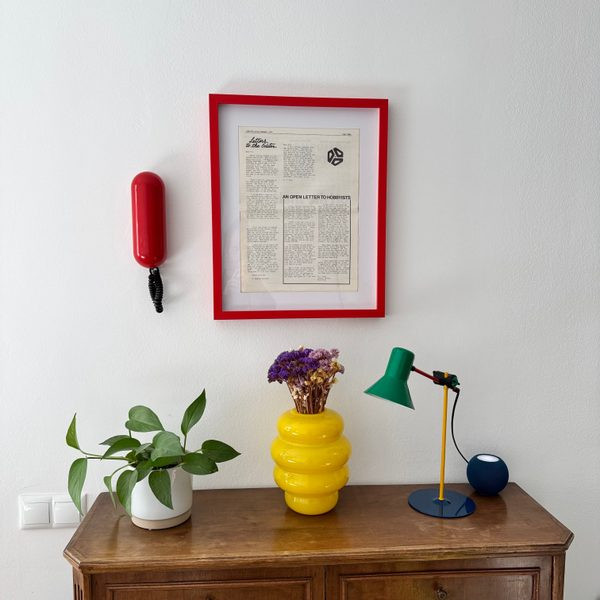
An open letter to hobbyist by Bill Gates
An Open Letter to Hobbyists es una carta escrita en 1976 por Bill Gates, cuando era cofundador de Microsoft, y fue publicada en el boletín del Homebrew Computer Club. En esta carta, Gates criticaba la práctica común entre los aficionados a la informática de la época de compartir y copiar software sin pagar por él. En particular, se refería a la distribución no autorizada del intérprete de Altair BASIC, desarrollado por Microsoft para el ordenador Altair 8800. Contenido principal Gates argumentaba que: • Desarrollar software requería tiempo, esfuerzo y recursos. • La copia no autorizada desincentivaba a los desarrolladores. • Si los programadores no podían recibir compensación económica, dejarían de crear software de calidad. La carta tenía un tono directo y crítico, cuestionando la ética de quienes defendían el intercambio libre sin remuneración. Importancia histórica La carta es considerada un momento clave en la historia de la informática porque: 1. Marcó un cambio de mentalidad: En los años 70, el software a menudo se compartía libremente entre entusiastas. Gates defendió la idea de que el software debía ser un producto comercial. 2. Sentó las bases del modelo de negocio del software propietario. 3. Abrió el debate sobre propiedad intelectual y ética digital, un debate que continúa hoy en día. 4. Contribuyó a la profesionalización de la industria del software, ayudando a consolidarla como un sector económico independiente del hardware. En resumen, An Open Letter to Hobbyists fue un texto breve pero influyente que anticipó el modelo comercial del software moderno y marcó una diferencia clara entre la cultura “hacker” colaborativa inicial y el naciente enfoque empresarial de la industria tecnológica.